

+86 571 8659 2517

+86 180 5841 8258

info@zmuni.com


This article provides a comprehensive overview of key regulatory developments in the food sector in March 2026, both in China and internationally. It focuses on updates related to new food ingredients, food additives, health foods, and feed, aiming to offer timely and in-depth regulatory alerts for enterprises engaged in food import and export. China Food Regulatory Updates Chinese Mainland 🔘 China Updates Review Status of New Food Ingredients and Additives (March 2026) In March 2026, China's National Health Commission (NHC) released the latest update on the review status of "Three New Foods," covering new food ingredients, new food additives,

On March 27 2026, China's General Administration of Customs (GACC) released its list of non-compliant imported food products for February 2026. A total of 452 batches from 42 countries and regions were denied entry, representing This represents a month-on-month decrease of approximately 28% (down 177 batches from 629 in January 2026), but a year-on-year increase of about 69% (up 185 batches from 267 in February 2025). The rejected shipments covered a wide range of categories, including frozen meat and poultry, aquatic products, edible oils, beverages, confectionery, alcoholic drinks, and biscuits. By country of origin, the United States recorded the highest number of rejected batches

The global cosmetics regulatory environment continues to evolve. To help businesses stay updated with regulatory changes, ZMUni Compliance Center regularly releases a monthly recap of global cosmetics regulations. This article covers the regulatory developments related to cosmetics in China and globally in March 2026, with an emphasis on updates in cosmetic ingredients and cosmetic management, among other areas. China Cosmetic Regulatory Updates New Cosmetics Ingredients (NCI) In March 2026, 15 new cosmetic ingredients were notified with the China National Medical Products Administration (NMPA). They include: The technical requirements for the 15 NCIs mentioned above have not been disclosed,
On March 31, 2026, China's National Medical Products Administration (NMPA) released the Announcement on Matters Related to Cosmetics Registration and Notification (Draft for Comments), inviting public comments from March 31 to April 30, 2026. Stakeholders may submit feedback to hzpjgyc@nmpa.gov.cn. The draft aims to implement the Opinions on Deepening Cosmetics Regulatory Reform and Promoting High-Quality Industry Development (No. 18 [2025]) and to further advance reforms in cosmetics evaluation and approval. It sets out eight key measures. Among these, provisions related to encouraging first launches in China, reducing animal testing requirements, and simplifying changes to domestic responsible persons are particularly relevant
On March 30, 2026, China's National Medical Products Administration (NMPA) issued two draft mandatory national standards for public consultation, covering cosmetic labelling (Instructions for Use of Consumer Products – Part 3: General Labelling for Cosmetics, see our separate update for details) and toothpaste safety (General Technical Requirements for the Safety of Toothpaste). The consultation period runs from March 30 to May 29, 2026. Under the Cosmetics Supervision and Administration Regulations (2021), toothpaste is regulated by reference to general cosmetics in China. In recent years, China has introduced specific regulatory requirements covering raw materials, physicochemical and microbiological testing, and toxicological evaluation, alongside
On March 30, 2026, China's National Medical Products Administration (NMPA) issued two draft mandatory national standards for public consultation, covering cosmetic labelling (Instructions for Use of Consumer Products – Part 3: General Labelling for Cosmetics) and toothpaste safety (General Technical Requirements for the Safety of Toothpaste, see our separate update for details). The consultation period runs from March 30 to May 29, 2026. The General Labelling for Cosmetics seeks to unify regulatory requirements and introduce innovations such as electronic labelling, improving consumer information access, safety protection, and regulatory efficiency in the cosmetics sector. Once finalized, it will replace GB 5296.3—2008.
From March 16 to March 23, 2026, 4 new cosmetic ingredients (NCIs) have completed notifications with China’s National Medical Products Administration (NMPA). Ceramide OP Royal jelly, often referred to as a "longevity factor," is rich in 10-hydroxy-2-decenoic acid (10-HDA), a key active known for its strong antioxidant and anti-aging potential. However, single-ingredient approaches face limitations in addressing photoaging and repair. An upgraded derivative, Ceramide OP, demonstrates enhanced performance compared with 10-HDA. It shows superior efficacy in promoting skin tissue repair, improving elasticity and resilience, and combating skin aging. Tetrastigma Hemsleyanum Leaf Extract Tetrastigma hemsleyanum is a vine species commonly found
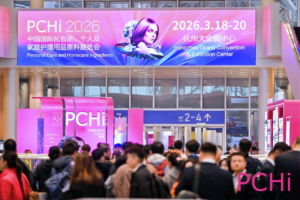
From March 18 to 20, 2026, PCHi 2026 took place in Hangzhou, bringing together a wide range of industry players across the cosmetic, personal care, and home care sectors. This year's edition featured over 860 exhibitors from 26 countries and regions, with exhibition space exceeding 70,000 square meters, and attracted professional visitors from more than 70 countries worldwide. As one of the leading global events for cosmetic ingredients and related industries, PCHi continues to serve as an important platform for industry exchange and international collaboration. During the exhibition, Chris Wang, Senior Regulatory Analyst & Head of
+86 571 8659 2517
+86 180 5841 8258
info@zmuni.com