

+86 571 8659 2517

+86 180 5841 8258

info@zmuni.com


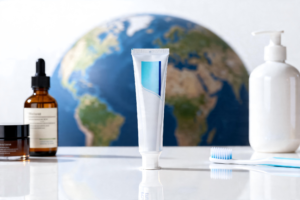
Toothpaste is one of the most universal consumer healthcare products—but also one of the most inconsistently regulated across global markets. Depending on the jurisdiction, it may be treated as a cosmetic, an OTC drug, or a hybrid category subject to both cosmetic and pharmaceutical controls. These differences go far beyond terminology: they directly shape product formulation strategy, claims design, regulatory timelines, and market entry feasibility. For international brands, toothpaste compliance is rarely about meeting a single global standard. Instead, it requires navigating distinct regulatory philosophies in different markets. China: Notification-Based Cosmetic System In China, toothpaste is defined

China remains a highly regulated but attractive market for global food exporters. Recent data released by China Customs on rejected food imports in 2025 highlights a number of recurring compliance issues, particularly around labeling, ingredient use, and regulatory alignment. Against this backdrop, several key compliance considerations have emerged for companies seeking to access the Chinese market. 1. Market access and regulatory entry requirements Market access remains a foundational step for food imports into China. Overseas manufacturers, exporters, and agents are required to complete registration with the General Administration of Customs of China (GACC). In addition,
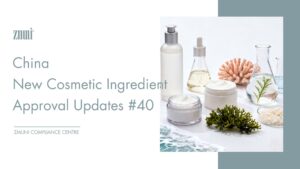
From April 13 to 17, 2026, 5 new cosmetic ingredients (NCIs) have completed notifications with China's National Medical Products Administration (NMPA). Notification 20260061 - Green Crab Peptides According to public reports, this is a novel natural polypeptide preservative derived from marine antimicrobial peptides. It is unmodified, with a clear mechanism of action and no known risk of inducing antimicrobial resistance. The ingredient provides effective antimicrobial protection alongside anti-inflammatory, antioxidant, and skin-repair benefits. It is stable under high temperatures and across a wide pH range, highly water-soluble, and non-irritating, making it suitable for sensitive skin applications. Produced via fermentation or synthesis,
On April 15, China's National Medical Products Administration (NMPA) released six technical guidelines to further standardize the research and evaluation of hair dye, perming, and sunscreen products. The six guidelines are: Technical Guidelines for Hair Dye Cosmetics (Trial) Technical Guidelines for Quality Control of Hair Dye Cosmetics (Trial) Technical Guidelines for Perming Cosmetics (Trial) Technical Guidelines for Quality Control of Perming Cosmetics (Trial) Technical Guidelines for Sunscreen Cosmetics (Trial) Technical Guidelines for Quality Control of Sunscreen Cosmetics (Trial) These trial guidelines close a key regulatory gap by introducing category-specific standards for hair dye, perming, and sunscreen
On April 13, 2026, China's National Medical Products Administration (NMPA) has carried out the fourth dynamic update of the Inventory of Existing Cosmetic Ingredients in China (IECIC). The updates to the inventory specifically includes: Saussurea involucrata callus powder has reached three-year safety monitoring period, following evaluation and confirmation, it has been included in List II of IECIC. Also, the Chinese names and/or INCI names/English names of 49 ingredients listed in List I of IECIC have also been standardized. Following this update, a total of six new cosmetic ingredients have now been included in List II of the IECIC, namely: No. Ingredient
From April 10 to 12, 2026, 3 new cosmetic ingredients (NCIs) have completed notifications with China's National Medical Products Administration (NMPA). Cyclocarya Paliurus Leaf Extract Cyclocarya paliurus (Batal.) Iljinskaja, a deciduous tree species in the walnut family endemic to China, is primarily found in the middle and lower reaches of the Yangtze River. It is commonly referred to as the "money tree" due to its distinctive coin-shaped fruits. In 2013, the National Health Commission of China (formerly the National Health and Family Planning Commission) officially approved its leaves as a novel food ingredient, opening the door for broader development and
On April 7, 2026, China's National Medical Products Administration (NMPA) released five new cosmetic industry standards, marking the first issuance of such standards by the NMPA Cosmetics Standardization Technical Committee since its establishment in 2024. The standards will come into effect on May 1, 2027. All five standards are recommended (non-mandatory) and include: General Technical Requirements for Biotechnology-Derived Cosmetic Ingredients (YY/T 10001—2026) General Technical Requirements for Plant Origin Cosmetic Ingredients (YY/T 10002—2026) Cosmetic Ingredient - Centella Asiatica Extract (YY/T 10003—2026) Cosmetic Ingredient - Acetyl Hexapeptide-8 (YY/T 10004—2026) Cosmetic Ingredient - Copper Tripeptide-1 (YY/T 10005—2026) The two general technical standards establish, for
From April 1 to 7, 2026, 6 new cosmetic ingredients (NCIs) have completed notifications with China's National Medical Products Administration (NMPA). Cyclic Peptides In this issue, two of the newly notified NCIs are cyclic peptides. Compared with linear peptides, cyclic peptides demonstrate stronger resistance to enzymatic degradation and greater structural stability, thereby enhancing the longevity of skincare efficacy. Among them, Notification No. 20260053 was filed by the well-known Chinese cosmetics company Proya. Notification No. 20260057, Cyclo sh-Pentapeptide-46 SP, was filed by Zhejiang Peptites Biotech Co., Ltd., a leading Chinese raw material supplier. It is worth noting that Cyclo sh-Pentapeptide-46 SP
+86 571 8659 2517
+86 180 5841 8258
info@zmuni.com