

+86 571 8659 2517

+86 180 5841 8258

info@zmuni.com


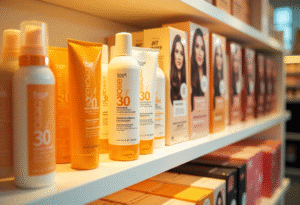
On July 31, 2025, China's National Institutes for Food and Drug Control (NIFDC) issued a public consultation notice on six draft technical guidelines concerning the research and quality control of hair dye, perm, and sunscreen cosmetics. These guidelines aim to provide clearer technical direction for product development, safety assessment, and quality standards for high-risk cosmetic categories—commonly referred to as special cosmetics under China's regulatory framework. The consultation is open for public feedback until August 15, 2025. Comments should be submitted via email to: hzppjzx@nifdc.org.cn. What's Included: Technical Guidelines for Hair Dye Products (Trail)(Draft for Comments) Technical Guidelines for Hair Dye Products Quality

On July 30, 2025, China's National Institutes for Food and Drug Control (NIFDC) released three draft testing methods, aimed at detecting prohibited ingredients in cosmetics, including substances such as diethylene glycol, dyclonine hydrochloride, and 16α-hydroxyprednisolone. The comment period is open until August 20, 2025, and feedback can be submitted via NIFDC's Cosmetic Standards Formulation and Revision Management System. Details are as follows: Testing Method Scope Determination of Diethylene Glycol in Cosmetics (Draft) This method specifies the procedure for determining the content of Diethylene Glycol in cosmetics using gas chromatography-mass spectrometry). It applies to creams and lotions, liquids (water- or

On July 23, 2025, China announced that the full customs closure of the Hainan Free Trade Port will take effect on December 18, 2025. This marks a key step in China's reform agenda, establishing Hainan as a customs-supervised free trade zone with zero tariffs, simplified import procedures, and global-standard investment rules. For international brands in cosmetics, personal care, food, and other FMCG sectors, Hainan is becoming a strategic gateway into China, offering preferential tax policies, supply chain flexibility, and streamlined regulatory access. What Is "Customs Closure"? Over the past decade, China has pursued a more targeted, rules-based trade policy, with the

From July 10 to July 22, 2025, 4 new cosmetic ingredients were notified with the China National Medical Products Administration (NMPA). The technical requirements for the 4 new cosmetic ingredients mentioned above have not been disclosed, and they have not yet entered the safety monitoring period. S-Acetyl-L-Glutathione S-Acetyl-L-Glutathione (SAG), an important precursor of glutathione, has gained widespread attention in recent years in the fields of food and dietary supplements. Glutathione is a key antioxidant in the human body, involved in various physiological functions, including antioxidant defense, immune regulation, and detoxification processes. SAG possesses antioxidant, brightening, and anti-aging properties, and

On July 17, 2025, China's General Administration of Customs (GACC) released its list of non-compliant imported food products for June 2025. According to the list, a total of 485 batches from 45 countries and regions were denied entry — representing a 4% increase from the previous month and a 13% rise year-on-year. The number of non-compliant food imports continues to rise. The majority of non-compliant imports came from Spain (18.1%), the U.S. ranked second (17.5%), followed by Brazil (13.2%), and Japan (7.4%). Key reasons for import rejections included: - Non-compliance with national food standards (272 batches) - Unqualified labeling (55 batches) - Discrepancy between cargo and certificates (54
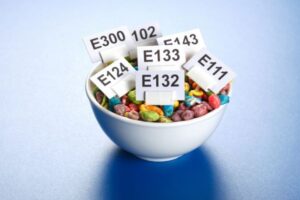
For related insights on ingredient approvals, see our article on New Food Ingredient Applications in China – H1 2025. Both food ingredients and food additives are regulated under China's "Three New Foods" system. Overview As of June 30, 2025, China's National Health Commission (NHC) released two official "Three New Foods" announcements (Notice No. 1 and No. 3 of 2025), approving 14 new food additive varieties, including new substances, expanded usage scopes, and updated specifications. This is consistent with the number of approvals granted in the first half of 2024, indicating a stable regulatory pace. H1 2025 at

As the food industry grows and consumer demands diversify, innovation in new food ingredients becomes crucial for product differentiation and market strategy in China. This article summarizes China's new food ingredient acceptance, approval, and regulatory trends in H1 2025 (data up to June 30), offering practical compliance insights for food companies. Application Trends and Review Progress In H1 2025, China had received 34 new food ingredient applications, marking a significant year-on-year increase. Among them, 27 were domestic and 7 were imported. Compared with the same period in 2024, the number of applications more than doubled—already surpassing the full-year
In the first half of 2025, China continued to advance reforms in cosmetic regulations and oversight. This article provides a systematic review of regulatory updates across four key areas, offering insight into the evolving compliance landscape. Full Version of China Cosmetic Safety Assessment Reports As of May 1, 2025, all cosmetic registrants and notifiers in China are required to submit a full version of safety assessment report that complies with the latest regulatory requirements when applying for product registration or notification. To support this transition, China's National Institutes for Food and Drug Control (NIFDC) issued a series of official notices and guidance
+86 571 8659 2517
+86 180 5841 8258
info@zmuni.com