

+86 571 8659 2517

+86 180 5841 8258

info@zmuni.com


On June 11, 2026, the Ministry of Ecology and Environment of the People's Republic of China (MEE) issued a draft revision of the Measures for the Environmental Management Registration of New Chemical Substances (commonly known as "China REACH"). The revision proposes significant changes to the current MEE Order No. 12 of 2020 and is expected to take effect on August 15, 2026, together with the Ecological and Environmental Code of the People's Republic of China. For cosmetic companies and raw material suppliers, this update represents a significant shift in China's chemical management framework. Cosmetics, which were previously

On July 21, 2026, China's National Institutes for Food and Drug Control (NIFDC) issued a notice soliciting public comments on two cosmetic testing standards. Comments are invited until August 30, 2026. The two draft standards include Detection of Pseudomonas aeruginosa in Cosmetics and Determination of Ethanol and Other 39 Components in Cosmetics. Detection of Pseudomonas aeruginosa in Cosmetics Currently, the main testing methods for Pseudomonas aeruginosa in China include those specified in the Chinese Pharmacopoeia and GB 8538-2022 National Food Safety Standard – Methods for Examination of Drinking Natural Mineral Water. Internationally, commonly referenced methods for
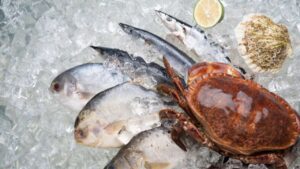
On July 16, 2026, China's General Administration of Customs (GACC) released its list of non-compliant imported food products for June 2026. A total of 548 batches from 40 countries and regions were denied entry, representing a month-on-month decrease of approximately 22% (down 158 batches from 706 in May 2026) and a year-on-year increase of about 13% (up 63 batches from 485 in the same period last year). The 548 rejected batches covered a wide range of categories, including beverages, honey, alcoholic beverages, frozen meat, poultry and aquatic products, edible oils, puffed foods, and other food products. By country
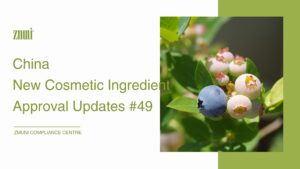
From July 10 to 17, a total of eight new cosmetic ingredients completed notification with China's National Medical Products Administration (NMPA). The technical requirements for all related NCIs have not been publicly disclosed. Plant Extracts Oryza Sativa (Rice) Hull Extract (Notification No. 20260122) This ingredient was filed by an affiliate company of the renowned beauty brand MISTINE. Oryza sativa subsp. indica (Indica rice) is a plant belonging to the genus Oryza in the Poaceae family and is mainly cultivated in tropical and subtropical regions. Previously, rice-derived ingredients such as Oryza Sativa (Rice) Extract had been filed

On July 15, 2026, China's National Medical Products Administration (NMPA) released a draft announcement for public consultation on the implementation of recent revisions to the Safety and Technical Standards for Cosmetics (2015 Edition) (STSC 2015). The draft announcement clarifies the implementation arrangements and operational requirements for the revised STSC 2015, aiming to provide regulatory certainty for cosmetic registrants and notifiers, ensure a smooth transition, and support product innovation and industry development while maintaining compliance. STSC 2015 serves as the core technical requirements for cosmetic safety supervision in China. Since their implementation, they have been continuously updated
On July 15, 2026, China's National Center for Food Safety Risk Assessment (CFSA) issued a public consultation on 3 new varieties of food additives. The consultation is open until August 14, 2026, and comments or suggestions can be submitted to the official email address: xspyl@cfsa.net.cn. Details are as follows: 1. Lacto-N-neotetraose, LNnT Current regulatory status in China Lacto-N-neotetraose (LNnT) has already been approved as a food nutrition fortifier under Announcement No. 8 of 2023 and related announcements. It is currently permitted for use in modified milk powder (limited to milk powder for children), infant formula, follow-up formula,
South Korea's cosmetics industry continues to show strong global growth, with K-beauty brands gaining increasing recognition worldwide. In 2025, China became the second-largest export market for Korean cosmetics, with exports reaching approximately USD 2 billion, reflecting strong demand for innovative skincare and beauty products. With extensive experience supporting Korean cosmetics brands, ZMUni helps K-beauty companies navigate China's regulatory landscape and achieve compliant market entry. In the first half of 2026, we supported a diverse portfolio of Korean brands, from globally recognized names to emerging beauty innovators and professional skincare companies, delivering tailored regulatory solutions for their China expansion.
On July 13, 2026, China's National Center for Food Safety Risk Assessment (CFSA) issued a public consultation on 4 new food additives. The consultation is open until August 12, 2026, and comments or suggestions can be submitted to the official email address: xspyl@cfsa.net.cn. Details are as follows: 1. Coffea arabica bean total chlorogenic acid Recommended daily intake ≤400 mg/day (calculated based on a total chlorogenic acid content of 70 g/100 g; if the actual content exceeds this level, the intake amount shall be adjusted accordingly based on the actual content). Applicable population Not suitable for infants,
+86 571 8659 2517
+86 180 5841 8258
info@zmuni.com