




+86 571 8659 2517

+86 180 5841 8258

info@zmuni.com
China Customs regularly publishes lists of imported foods that are denied entry due to non-compliance. These cases highlight the strict regulatory oversight on imported foods, covering issues such as unauthorized ingredients, labeling errors, inconsistent documentations, and registration issues with overseas food manufacturers. For overseas brands, this underscores the importance of ensuring full compliance with Chinese food standards and regulations before attempting to enter the market. Proper preparation helps avoid shipment rejections, fines, delays, and reputational damage, and ensures a smoother path to market.
What is Pre-packaged Food in China?
Prepackaged food refers to the foods prepackaged or made up in advance with a measured quantity in a container and have unified labeling of quality or volume within certain range.
General Pre-packaged Foods
Examples include milk, beverages, biscuits, canned food, and ice cream, etc. These products should not appear in capsule, spray, drop, or similar dosage forms, as such forms typically fall under special food categories.
Special Foods
Special foods includes health foods, foods for special medical purposes (FSMP) and Infant formula foods. Although these products may also appear in a pre-packaged form, they do not follow the standard compliance pathway as for general pre-packaged foods. Instead, they require additional registration or notification with Chinese authorities.
Formula Compliance:
Before exporting the foods to China, it is essential to analyze the ingredients, processing methods, and intended use, and verify that all components comply with applicable Chinese food standards. If the formula includes any new food ingredients or new varieties of food additives, it must be verified that they are already approved for use in China. The use of health food ingredients (e.g., Coenzyme Q10, melatonin) is strictly prohibited, as well as any unapproved new food ingredients or food additive varieties.
Case Study:
Label Compliance:
Once the formula ingredients are confirmed to comply with Chinese standards, the product labeling must also undergo a full compliance review to ensure all required elements meet the applicable product standards. Common issues include making treatment or disease-prevention claims or failing to properly declare allergens (e.g., gluten). In March 2025, China released two updated food labeling standards and an administrative measure that further clarify and standardize labeling requirements for imported pre-packaged foods.
According to the regulations, a complete Chinese label must include the following elements:
Product name
List of ingredients
Storage conditions
Country of origin
Name, address, and contact information of the importer or agent
Net weight
Date marking
Nutrition information panel
Declaration of allergens
Target population, serving size, and preparation instructions
Other information required by specific product standards
More readings:
China's New Food Labeling Standard GB 7718-2025 Unveiled: 8 Critical Points to Master
Unpacking China's GB7718 - 2025 New National Standard for Food Labeling: Key Takeaways
Regulatory Background
Effective January 1, 2022, China Customs Decree 248 mandates that all overseas food production, processing, and storage enterprises exporting to China must complete registration with the General Administration of Customs of the People's Republic of China (GACC). Upon approval, a unique "In-China Registration Number"("在华注册编号" in Chinese) must be displayed on both inner and outer packaging of the products. This registration is valid for five years.
Food Category and Registration Method
(1) Registration recommended by overseas competent authorities (18 Categories of Food);
18 Categories of Food | ||
Meat and meat products | Casings | Aquatic products |
Dairy products | Bird's nest and bird's nest products | Bee products |
Eggs and egg products | Edible oils and fats | Filled pasta |
Edible grains | Milled grain products and malt | Fresh and dehydrated vegetables and dried beans |
Seasonings | Nuts and seeds | Dried fruits |
Unroasted coffee beans and cocoa beans | Special dietary foods | Health foods |
(2) Self-registration by overseas manufacturers (other than 18 Categories of Food). Most general pre-packaged foods fall outside these 18 categories and can be registered through the self-registration process.
GACC Registration Procedure in China
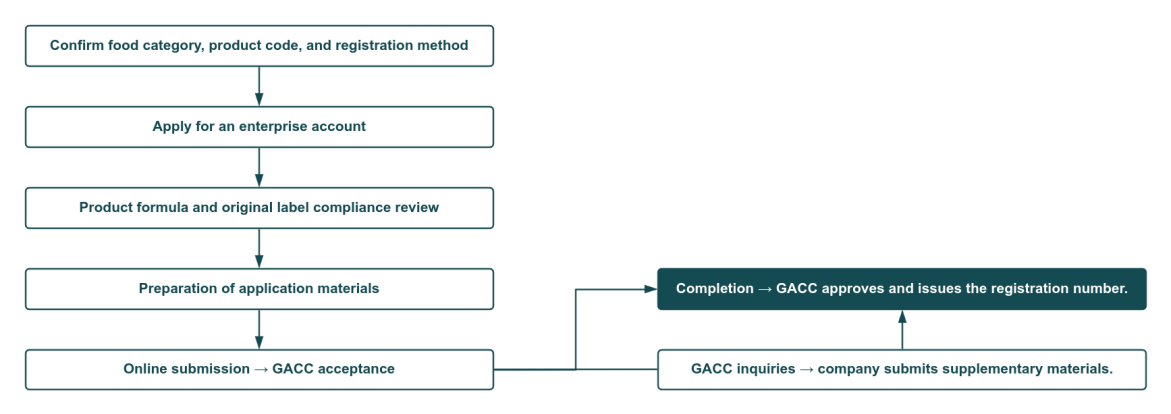
Required Documentation of GACC Registration in China
For Self-Registration:
Manufacturer's application forms for registration;
Documents certifying the identification of the manufacturer, such as business license issued by the competent authority of the exporting country/region;
Statement by the manufacturer that it conforms with requirements of these Regulations;
Other documents required by GACC.
For Recommendation-Registration:
Letter of recommendation by the competent authority of the exporting country/region;
List of recommended manufacturers and the manufacturers’ applications for registration;
Documents certifying identification of the manufacturer, such as the business license issued by the competent authority of the exporting country/region;
Statement that the producer recommended by the competent authority of the exporting country/region conform with requirements of these Regulations;
Reports of examinations/inspections/review conducted by the competent authority of the exporting country/region to relevant manufacturers.
More readings:
Compliance Guide for GACC Overseas Manufacturers Registration of Imported Food in China
China Issues New GACC Regulation on Registration of Overseas Food Manufacturers
Relevant Laws and Regulations
Food Safety Law of the People's Republic of China and its implementation regulations
Administrative Measures for the Safety of Imported and Exported Food of the People's Republic of China
Administrative Provisions on the Registration of Overseas Food Production Enterprises for Imported Food of the People's Republic of China
National Food Safety Standard - Standards for the Use of Food Additives(GB 2760)
National Food Safety Standard - Standards for the Use of Food Nutrition Fortifiers(GB 14880)
General Standard for the Labeling of Pre-packaged Foods(GB 7718)
General Standard for the Nutrition Labeling of Pre-packaged Foods(GB 28050)
Labeling of Pre-packaged Foods for Special Dietary Uses(GB 13432)
Announcements on the Approval of New Food Ingredients
National Standards and Industry Standards for Food Ingredients
......
We can provide reliable and cost-effective compliance services for China food importation, including:
Pre-packaged Food Formula Compliance Review
Pre-packaged Food Chinese Label Review and Design
Regulatory Consultation for China Market Access
GACC Overseas Manufacturer Registration for Imported Foods
Customs Import/Export Qualification Application
Importer Registration for Imported Foods
China Food Import & Export Customs Clearance
Last Updated on: November 28, 2025
+86 571 8659 2517
+86 180 5841 8258
info@zmuni.com