导航菜单

In August 2026, a novel food for which ZMUni Compliance Centre provided end-to-end regulatory and technical services successfully passed the technical review conducted by a Thai-accredited safety assessment body and received an approval letter from the Thai Food and Drug Administration (Thai FDA).
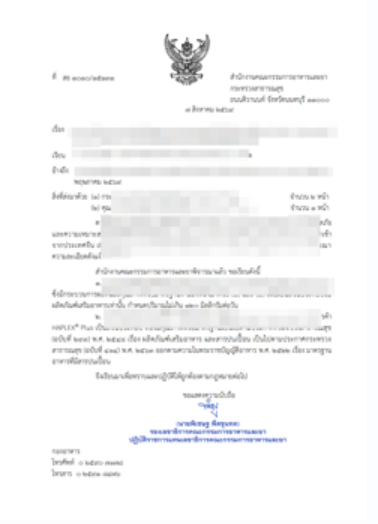
Thai FDA Approval Letter
"Publicly Listed" Does Not Mean "Generally Applicable"
In May 2026, the Thai FDA published a list of novel and non-novel foods that have undergone safety assessment. The list covers a number of ingredients that have attracted significant market attention, including human milk oligosaccharides (HMOs), eggshell membrane, Antrodia cinnamomea, pine bark extract, and calcium beta-hydroxy-beta-methylbutyrate (CaHMB).
| Assessment Type | Ingredient Category | Number | Representative Ingredients |
|---|---|---|---|
| Novel Food |
Ingredients / Extracts |
18 |
Eggshell membrane, etc. |
| Novel Food |
Vitamins, minerals, amino acids and other nutrients |
22 |
2'-Fucosyllactose (2'-FL), etc. |
| Non-Novel Food |
Ingredients / Extracts |
18 |
Pine bark extract, etc. |
| Non-Novel Food |
Vitamins, minerals, amino acids and other nutrients |
8 |
CaHMB, etc. |
*Note: The quantities and classifications were compiled based on the version published by the Thai FDA in May 2026.
This list is provided for reference only. The inclusion of a substance on the list does not mean that it can be freely used by other companies. The use of each approved substance remains subject to the specific approval letter issued by the Thai FDA to the relevant company.
The relevant approval letter is required for the registration of food products containing the approved substance. Therefore, if another company wishes to use a substance that has already been approved for a different company, it would generally need to source the substance from the approved manufacturer or supplier and rely on the approval documentation associated with that substance.
The Challenge Goes Beyond "Preparing the Documents"
Novel foods and non-novel foods that have not yet been approved in Thailand generally need to undergo a safety assessment by an accredited assessment body, after which the assessment results are submitted to the Thai FDA for official review and approval.
In practice, project timelines often depend on whether the regulatory pathway is identified correctly at the outset and whether the technical evidence provides a complete and consistent basis for the assessment.
Pathway determination:
First, determine whether the ingredient qualifies as a novel food or should follow the safety assessment pathway for foods that are not considered novel foods. Factors such as the manufacturing process, source of the ingredient, and biotechnology-related characteristics may also affect the selection of the appropriate assessment body.
Assessment criteria and safety evaluation:
When deriving a safe level for human consumption from a no-observed-adverse-effect level (NOAEL) established in animal studies, an appropriate uncertainty factor needs to be selected based on factors such as the study duration, completeness of the data, and differences between the study animals and the target human population. In certain assessment scenarios, a more conservative approach may be applied. For example, when extrapolating a NOAEL from a 90-day oral toxicity study in rats to a safe dose for humans, an uncertainty factor of 1,000 may be applied.
Milestone management:
The external safety assessment, responses to supplementary questions, and Thai FDA review are closely interconnected. Fees charged by the authorities and assessment body, translation requirements, and local submission arrangements should also be incorporated into the overall project plan.
Turning a project from "eligible for submission" into one that is "approvable and ready for market implementation" requires the intended conditions of use to be considered alongside the safety evidence, manufacturing process, and quality control measures from the very beginning. This helps avoid repeated requests for supplementary information at later stages due to inconsistencies between the proposed use and the supporting evidence.
In this project, ZMUni Compliance Centre supported the client throughout the process, with a focus on:
Regulatory pathway design: Identifying the applicable submission pathway and key regulatory risks based on the ingredient's characteristics, manufacturing process, and intended conditions of use.
Technical dossier and assessment support: Conducting a gap analysis, organizing and localizing technical documentation, and coordinating responses to supplementary questions raised during the assessment.
End-to-end project management: Following up on key milestones and assessment feedback, and coordinating the process through to official approval.
This successful approval marks an important milestone in the client's international market expansion and further demonstrates our practical experience in regulatory access for novel foods and food ingredients in Thailand and other overseas markets.
ZMUni Compliance Centre provides food regulatory compliance services across domestic and international markets, helping businesses navigate market access and regulatory requirements.
If you are planning to enter the Thai market or expand into other international markets and need regulatory support, please feel free to contact us at info@zmuni.com.