导航菜单

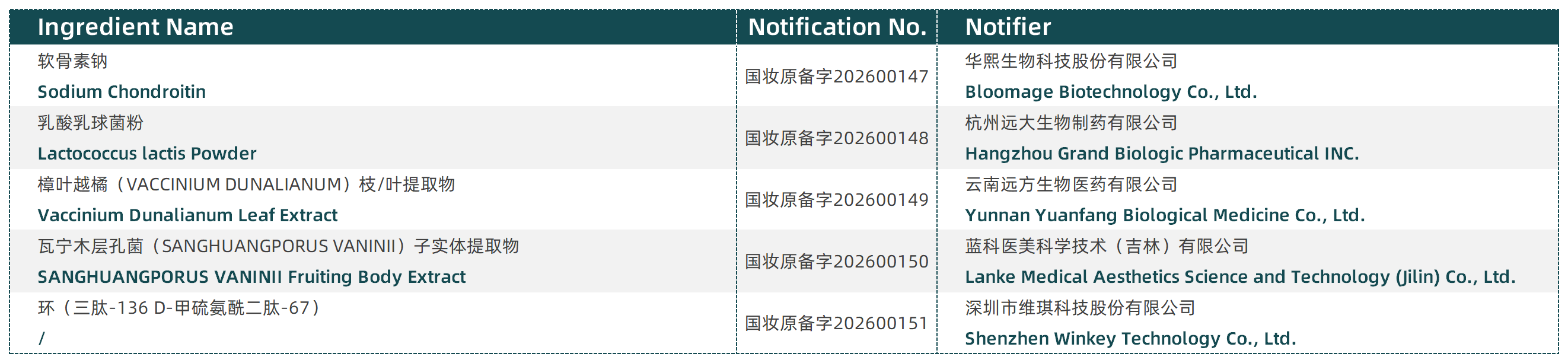
From September 21 to 30, a total of five new cosmetic ingredients completed notification with China's National Medical Products Administration (NMPA). The technical requirements for all related NCIs have not yet been publicly disclosed.
Sodium chondroitin is a functional glycosaminoglycan (GAG) found in the extracellular matrix (ECM), where it works with hyaluronic acid and collagen to support ECM homeostasis and mechanical properties. Traditionally used in orthopedics, it has recently gained attention in medical aesthetics and tissue repair.
According to Bloomage Biotech, Bloomsac™ Sodium Chondroitin is a non-sulfated polysaccharide produced by microbial fermentation using GRAS strains, providing a 100% animal-free alternative. It has a purity of ≥95% and endotoxin level of ≤0.05 EU/mg, with controlled molecular weight and strong batch consistency. It is reportedly the first fermentation-derived sodium chondroitin in China to have a medical device master file registered. It has passed 11 biocompatibility tests and is positioned for cartilage homeostasis, corneal cell protection, and skin collagen regeneration.
Founded in 2000, Bloomage Biotech is a biotechnology and biomaterials company covering bioactive ingredients, medical products, and consumer products, including functional skincare and functional foods.
Lactococcus lactis is an important model species of lactic acid bacteria. Lactococcus lactis Powder is reportedly the first probiotic powder cosmetic new ingredient in China to complete the filing and public disclosure process.
The notifier, Hangzhou Grand Biologic Pharmaceutical INC. was established in 2004 and joined China Grand Enterprises, Inc. in 2013. Its therapeutic focus covers gastrointestinal and metabolic health. In the probiotic field, the company has established a proprietary library of over 10,000 functional strains, with an integrated R&D system covering strain screening, fermentation, and quality control.
Vaccinium dunalionum belongs to the genus Vaccinium in the Ericaceae family. Its young branches and leaves are traditionally processed into "Quezui Tea" (雀嘴茶 in Chinese), a distinctive Yi ethnic tea from central Yunnan with a history dating back to the Ming Dynasty.
The ingredient is derived from the branches and leaves, distinguishing it from blueberry-type ingredients derived from the fruit. Its growing interest in cosmetics is mainly attributed to its high content of caffeoyl arbutin compounds.
Sanghuangporus vaninii belongs to the genus Sanghuangporus in the family Hymenochaetaceae. Its fruiting body is traditionally used in Chinese medicine and is one of the medicinal fungi known as "Sanghuang" (桑黄 in Chinese).
It is widely cultivated in Jilin Province, where it is regarded as a traditional medicinal resource of the Changbai Mountain region and an important cultivated medicinal fungus.
Issue 52: 7 New Cosmetic Ingredients Notified in Early September
Issue 51: Five New Ingredients Announced in Late August
......