

+86 571 8659 2517

+86 180 5841 8258

info@zmuni.com


This article provides a comprehensive overview of key regulatory developments in the food sector inMay 2026, both in China and internationally. It focuses on updates related to new food ingredients, food additives, health foods, and feed, aiming to offer timely and in-depth regulatory alerts for enterprises engaged in food import and export. China Food Regulatory Updates 🔘 China Three New Food Updates: 16 Newly Approved Substances (May 2026) On May 27, 2026, China's National Health Commission (NHC) officially approved 16 substances as "Three-New Food", including 7 new food ingredients, 7 new food additive varieties, and 2 new food-related

The global cosmetics regulatory environment continues to evolve. To help businesses stay updated with regulatory changes, ZMUni Compliance Center regularly releases a monthly recap of global cosmetics regulations. This article covers the regulatory developments related to cosmetics in China and globally in May 2026, with an emphasis on updates in cosmetic ingredients and cosmetic management, among other areas. China Cosmetic Regulatory Updates New Cosmetics Ingredients (NCI) In May 2026, 20 new cosmetic ingredients were notified with the China National Medical Products Administration (NMPA). They include: The technical requirements for the 20 NCIs mentioned above have

On May 29, 2026, China's National Medical Products Administration (NMPA) issued Announcement No. 51 of 2026, incorporating eight testing standards into the Safety and Technical Standards for Cosmetics (STSC 2015). Details are as follows: No. Standard New/Revised 1 Determination of Trivalent Chromium and Hexavalent Chromium in Cosmetics New 2 Determination of Ethyl Lauroyl Arginate HCl in Cosmetics New 3 Determination of 1-hydroxyethyl-4,5-diaminopyrazole sulfate and other 10 kinds of ingredients in cosmetics New 4 Safety Evaluation of Long-term Using Tests of Cosmetics on Human Body New 5 Bacterial Reverse Mutation Test Revised 6 In Vitro Mammalian Cells Chromosome
On May 27, 2026, China's National Health Commission (NHC) officially approved 16 substances as "Three-New Food", including 7 new food ingredients, 7 new food additive varieties, and 2 new food-related products. The details of the new food ingredients and additive varieties are as follows: New food ingredients: No. Chinese Name English Name 1 牡丹籽油 Peony seed oil 2 显齿蛇葡萄叶多酚 Nekemias grossedentata leaf polyphenols 3 青钱柳叶多酚 Cyclocarya paliurus leaf polyphenols 4 动物双歧杆菌乳亚种 XLTG11 Bifidobacterium animalis subsp. lactis XLTG11 5 紧密镰刀菌蛋白 Mycoprotein from Fusarium compactum 6 蛋白核小球藻 Chlorella pyrenoidosa Synonym: Chlorella Vulgaris, Auxenochlorella pyrenoidosa 7 植物甾醇 Plant sterol

On May 18, 2026, China's General Administration of Customs (GACC) released its list of non-compliant imported food products for April 2026. A total of 463 batches from 37 countries and regions were denied entry, representing a a month-on-month increase of approximately 4% (up 18 batches from 445 in March 2026) and a year-on-year increase of about 43% (up 138 batches from 325 in the same period last year). The rejected shipments spanned a wide range of categories, including capsules, frozen meat, poultry and aquatic products, nuts and nut products, beverages, bird's nest, alcoholic beverages, grains and grain products, baked
On May 20, 2026, China's National Center for Food Safety Risk Assessment (CFSA) issued a public consultation on 6 new food additives. The consultation is open until June 20, 2026, and comments or suggestions can be submitted to the official email address: xspyl@cfsa.net.cn. Details are as follows: No. Name in EN Remark 1 Lacto-N-tetraose, LNT New food nutrition fortifier 2 Ascorbyl palmitate (enzymatic) Food additives with expand usage scope and amount 3 Neotame Food additives with expand usage scope and amount 4 Casein phosphopeptide (CPP) Food nutrition fortifier with expand usage scope 5 thaumatin(fermentation) Food additives with added
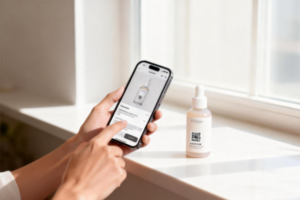
On October 20, 2025, China's National Medical Products Administration (NMPA) announced a three-year pilot initiative for electronic cosmetic labels, marking a major step in the digitalization of cosmetic labeling in China. As one of the designated pilot regions, Shanghai officially launched the initiative on February 1, 2026. As the implementation of the electronic cosmetic label initiative progresses, Shanghai Customs and Shanghai Medical Products Administration jointly issued an announcement on May 9, 2026 regarding the pilot application of electronic labels for imported cosmetics in Shanghai. The measures are intended to further optimize the port business environment and support the
On May 15, 2026, China's National Medical Products Administration (NMPA) issued Announcement No. 48 of 2026, incorporating three revised cosmetic standards into the Safety and Technical Standards for Cosmetics (STSC 2015). Among these, the revised standards for Biphenyl-2-ol and its salts and Acid Violet 43 (CI 60730) will take effect on June 1, 2028, with detailed requirements as follows: Chapter Reference No. Substance Name Maximum Concentration in Cosmetic Products Restrictions and Requirements Mandatory Labeling Requirements Chapter 3.1 Permitted Preservatives for Use in Cosmetics (Table 4) 34 Biphenyl-2-ol and its salts (a) 0.2% (as phenol) for rinse-off products;
+86 571 8659 2517
+86 180 5841 8258
info@zmuni.com